Category Archives: Services

Harry George Brewer

Harry George Brewer
Lance Sergeant C/6276
18th Battalion King’s Royal Rifle Corps

 Division 24
CIMG2169CIMG2168


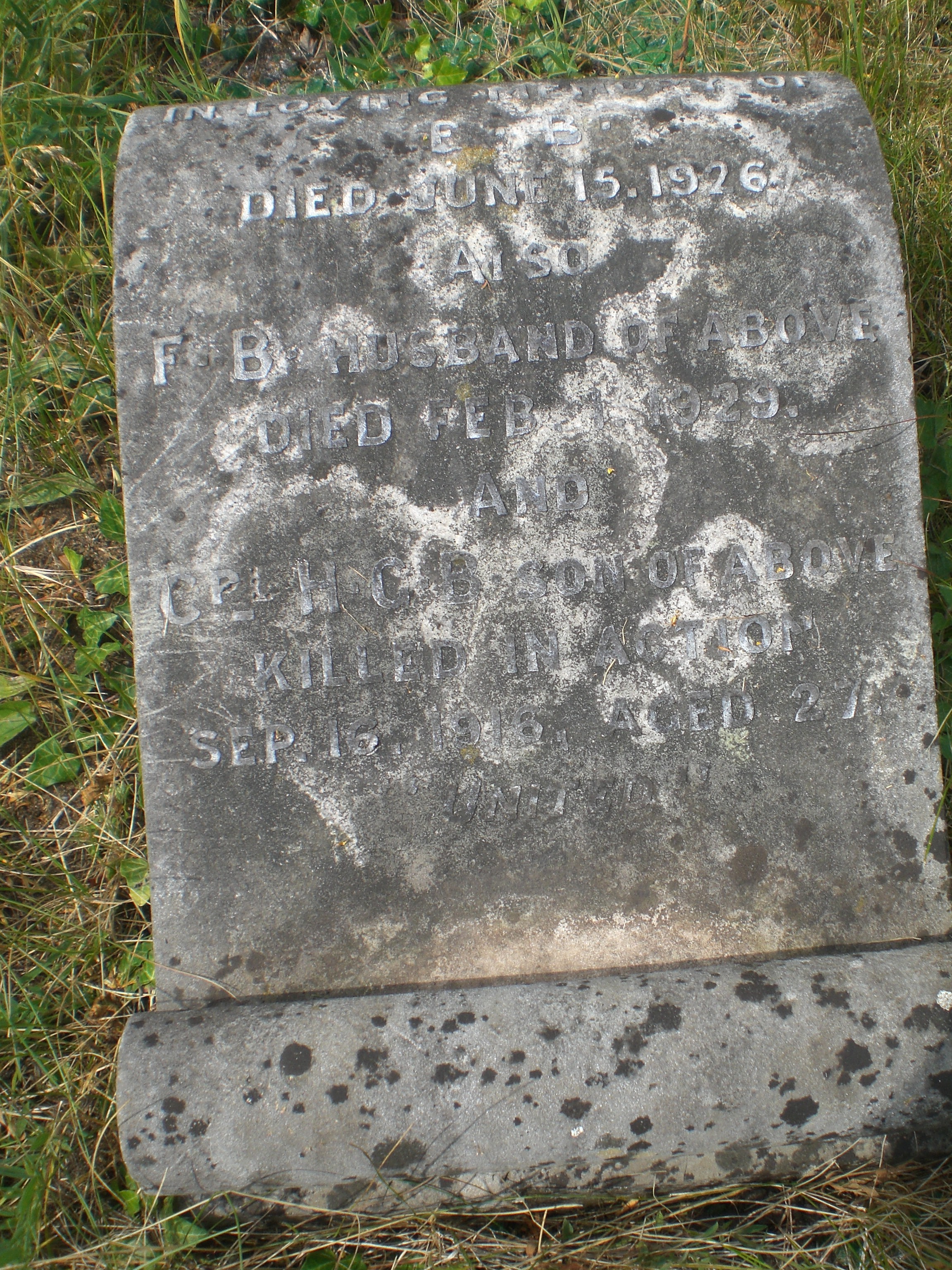
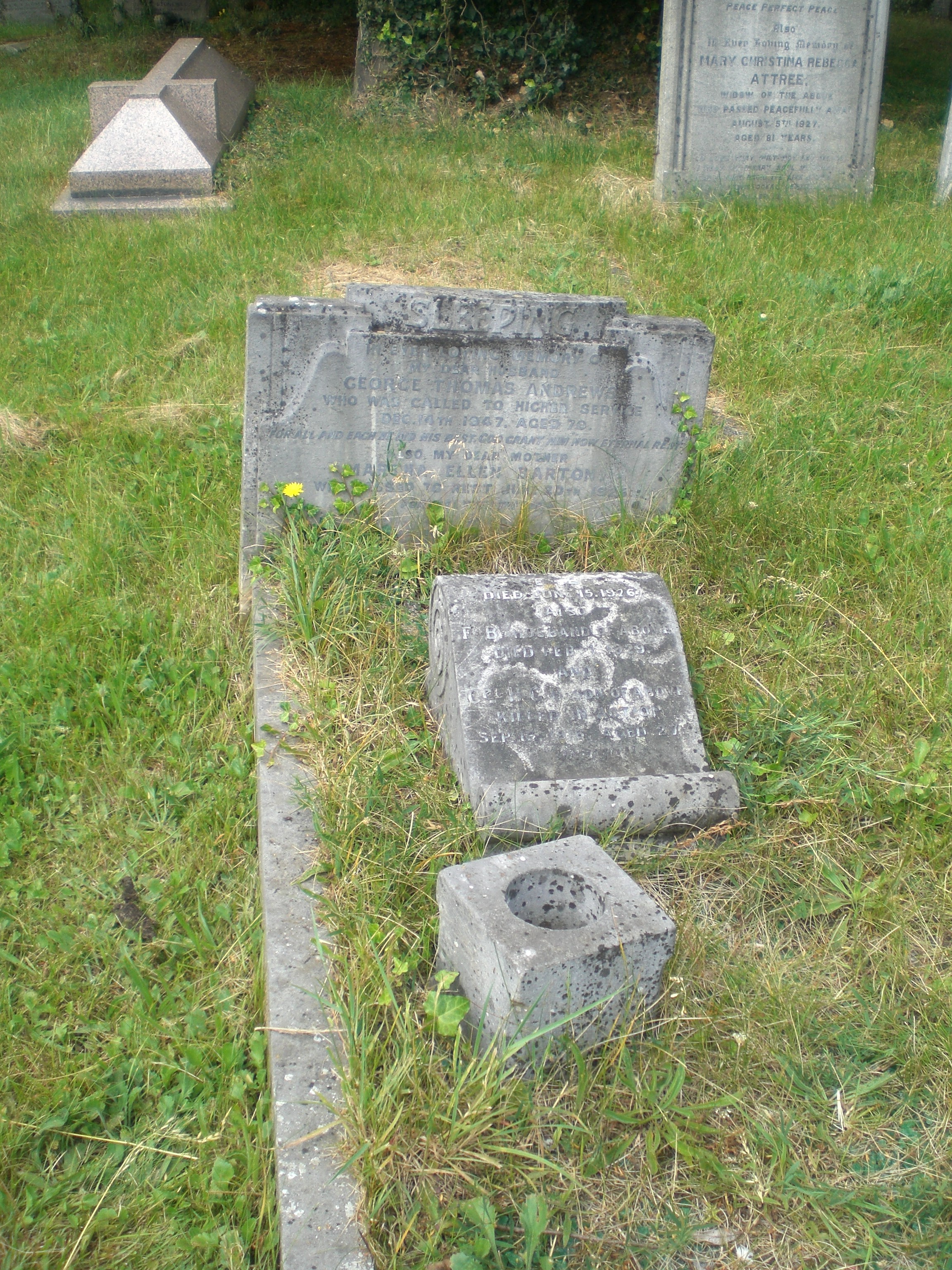
Harry George Brewer was the son of Frank and Emma Brewer, of 653, Oxford Road, Reading. A grave to the family of Barton and Andrews also bears the initials “E.B. and F.B. and Cpl. H.G.B. son killed in action September 16th 1916, aged 27”  is commemorated on a small scroll.  Burial records revealed the name Brewer.  The 1911 census records indicate the Harry Brewer was a journeyman carpenter. His father was a plumber and other sons also had trades.

 CWGC information revealed that Harry George Brewer was killed on the 15th September 1916. He is listed on the Thiepval Memorial to the Missing.  Pier and Face 13A and 13B.

 The 15th September was the beginning of the 3rd phase of the Somme offensive.   On this day an advance along six miles of front to a depth of 2000 -3000 yards took place.   The attack was special because it was the first time that the heavy armoured cars or tanks were used.  Although several tanks ditched along the way those that fought near Flers were very successful and assisted in the taking of the village.  During the next four days, all along the front, the fighting was bloody and many men lost their lives. Exactly where the  18th Battalion KRRC were positioned is not yet known. It is not clear upon which day Harry Brewer died but he had no known grave.  The allied attack was hindered on the 19th September by bad weather but,  resumed the day after and continued well into November.  During this time many thousands lost their lives.
Edward Brady

Edward Brady
Driver T3/029866 190th Company
Army Service Corps.

 Division 15

CIMG2163


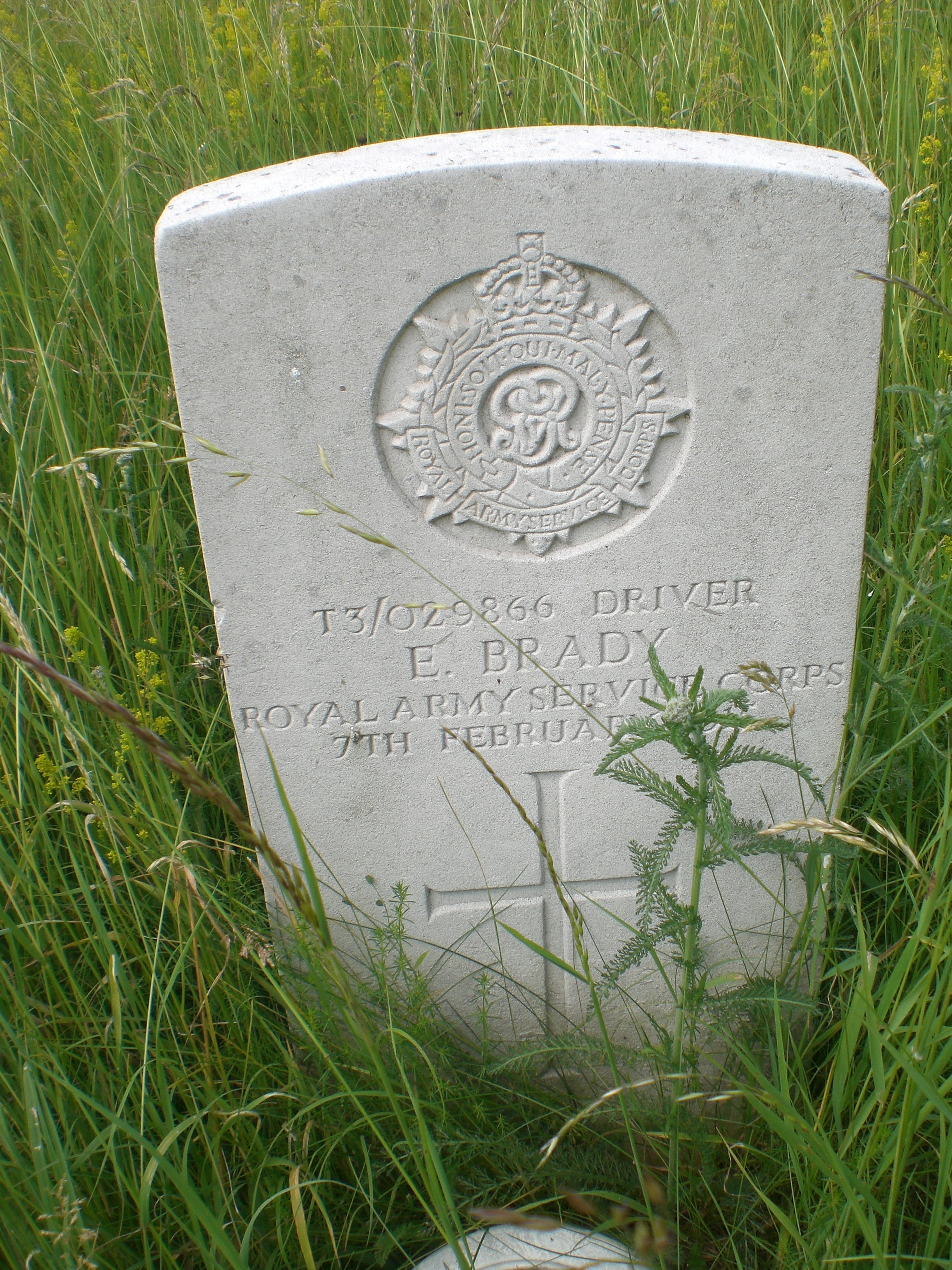
Edward Brady was stationed at Pangbourne.  He died on 7th  February 1915.  The local papers carried accounts of Edward Brady’s death. The Chronicle Feb. 12th 1915 titled their account 

 “Deserter’s dash for liberty”

Edward Brady 35 and was married to Ellen Brady and lived at 69, Cirencester Street, Harrow.  Before the war he had been a coal porter, he enlisted on 23rd November 1914.  His problems started at Christmas when he overstayed his leave.  His wife said she had not received her separation allowance and her husband  stayed to work in order to pay the rent.  She had received her allowance a week before he went back.  On the Friday evening he broke away from camp and was arrested the following morning in London.  He was being brought back to Pangbourne on a 3 o’clock Paddington train, he asked to go to the lavatory and was out of site for a short while.  During this time he jumped from the train which was stated to have been travelling at about 50 mph.  His  body was picked up near Ruscombe signal box.  Brady was taken to the Royal Berkshire Hospital but died next morning of his injuries. 

 Brady was posted as a deserter after his extended leave but this was later altered to a complaint of extended leave.  On his return he was put in cells for 7 days awaiting a court martial.   At the end of that time he was let out and given to understand he would have his discharge.  He absconded and when arrested was handcuffed but these were removed at the request of Mrs Brady and because it would be a disgrace to the regiment.  At the Police station he was told that he was liable to be shot for being a deserter.  Brady asked accompanying officer Sergeant. Alfred James Stableton if this was true the sergeant replied that such an extreme penalty would not be used in his case.  On the train Brady was “very jovial and absolutely sober”.  He died from shock following a fractured skull and arm and other injuries consistent with a fall from a train.  The post-mortuum also showed old pleurisy and fatty degeneration of the heart and liver.  In the course of summing up the Coroner said it was impossible to say whether the deceased left the train with the intent to take his own life or to escape.  The jury returned a verdict of death whilst trying to escape and expressed sympathy for the widow.

 A CWGC headstone marks Grave 16050, a small memorial from his wife is also on the grave.

Herbert Arthur Boyes

Herbert Arthur Boyes
Air mechanic 2nd Class 42524
Royal Flying Corps.

 War Plot
Division 71 and 72

In 1911 Herbert Arthur Boyes (26) had been married for less than one year to his wife Beatrice Annie Boyes (24). He was a carpenter working for a builder and the couple were living in his home town of York.

He started his working life as an apprentice to an ironmonger. His parents were Arthur and Maria Boyes and Herbert was the second of four sons, he also had a younger sister.

The story of the death of Herbert Boyes is another side to the tragedy of the war.  

Herbert Boyes was the husband of Beatrice Annie Boyes of 18, Alma Street, Beckett St. Leeds.  

The Mercury April 7th 1917 (page. 6) gave an account of the  Suicide of Air Mechanic Herbert Boyes under the headline of:

“Suicide of soldier – Depressed through failing sight”

The report states – Herbert Boyes ” took his life by hanging himself”. 

Captain E.F. Vaughan, adjutant at the technical training school Coley Park, represented the RAF.

“Mrs Beatrice Annie Boyes, widow of the deceased, said the latter was 32.  She saw him last at Leeds the previous Tuesday.  He had been there with her for six days.  He had not been well during his stay, complaining of his sight and pains in his head.

 He came from Farnborough to Reading some months ago, and went into hospital.  He was most interested in his work, being quite satisfied with the Army, but was depressed about his sight.  When it became worse he said he should put an end to himself, but if it got better he felt confident that he should get on in the Army, and looked forward to promotion.  His sight was the only thing that worried him.

 ….he was found hanging by a railway worker “Round his neck was a khaki handkerchief”.

The deceased had joined the school in September but was admitted to hospital on October 17th and discharged March 19th.  He had been suffering form optic neuritis.  On leaving hospital he had been granted six days leave.  He overstayed his leave for nearly a day, saying he was too ill to travel. His statement being verified no punishment was meted out to him.  He was only with the Royal Flying Corps for 20 days. He was a good worker with nothing against him……

Verdict “suicide during unsound mind”.

Herbert Boyes is buried in the war plot and his name is commemorated on the screen wall. He was found dead on the 31 March 1917. He was 32 years old.