Category Archives: Ypres

Leonard William Levey

Leonard William Levey
Private 44209
2/23 Bn.East Surrey Regiment

Little is known of Leonard William Levey except that he waskilled in action on 2 September 1918 during the time of the final British advance. He is buried at Wulverghem-Lindenhoek Road Cemetery, location V.E.17.

The 1911 census spells his name as Lenard William Levy and gives his address as 101, Orts Road, Reading. There were seven children living at home between the ages of 25 and four years; Leonard’s age is given as eleven years. His mother had borne twelve children in total although four had died. Alfred Levey, father was recorded as a miller at the biscuit factory and of those old enough to work all except one were employed at the biscuit factory. In 1911 Leonard was still at school.

Two battalions of the 23rd were found during the First World War for overseas service with a reserve battalion at home. The 1/23rd fought in France and Flanders from March 1915 until the end of hostilities in 1918, being involved in actions at Festubert, Loos, the Somme in 1916 and 1918, Messines, Ypres, Cambrai, Lille and Tournai. Casualties were heavy, 237 being killed and 262 wounded at Givenchy during the Battle of Festubert. The 2/23rd went initially to France in June 1916 but later went to Salonika and then to Egypt to take part in General Allenby’s offensive against the Turks in Palestine. Finally they returned to France in 1918 and saw action around Ypres. http://www.queensroyalsurreys.org.uk/militia_vol_territorial/mvt19_1.html 

Leonard William would have been about 18 years old at the time of his death and it is not known when he joined his battalion. His name is on the Alfred Sutton School war memorial.
Leslie Thomson

Leslie Thomson
Rifleman 1877
16th Batt. London Regt. Queen’s Westminster Rifles
 

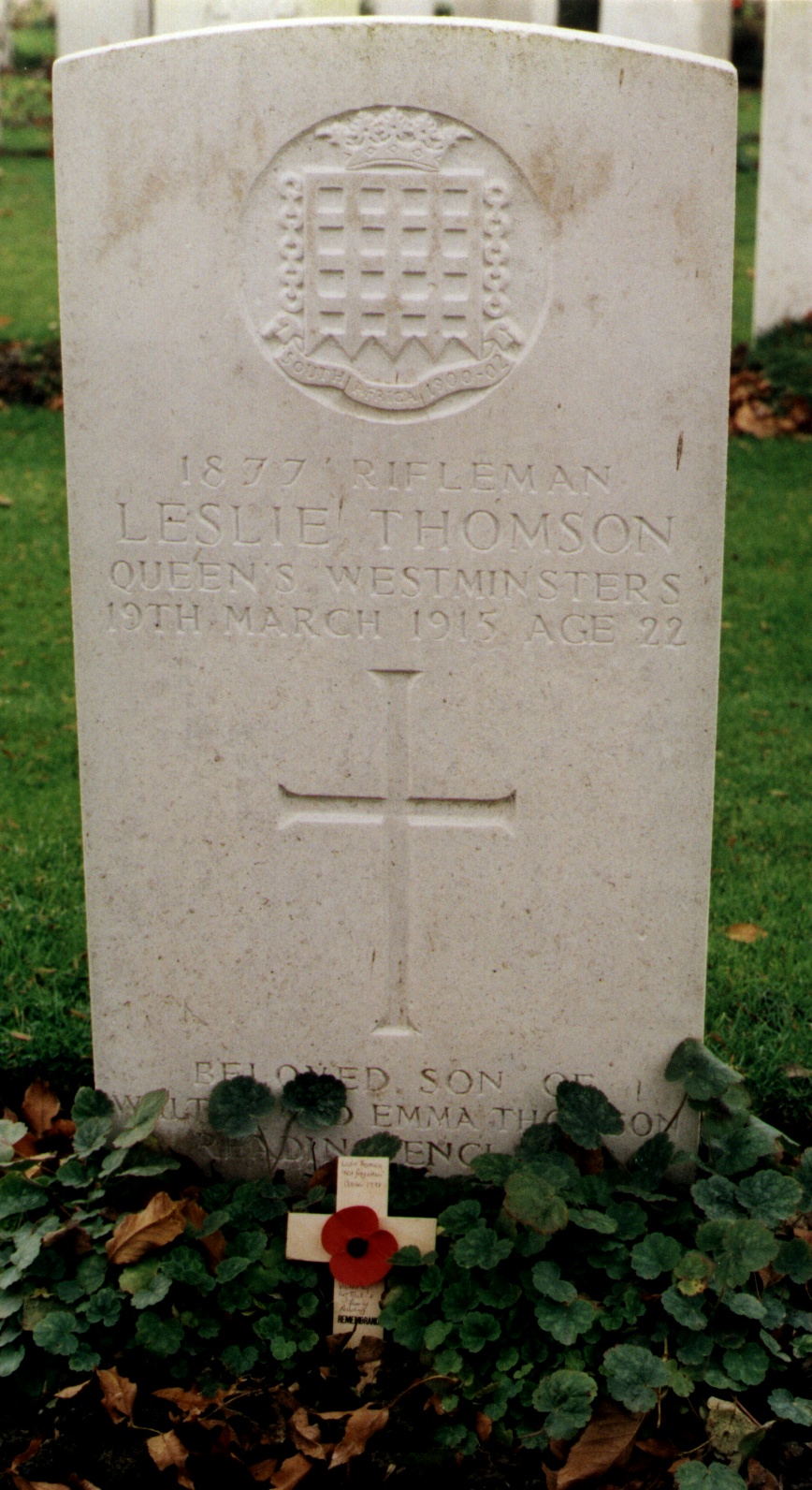
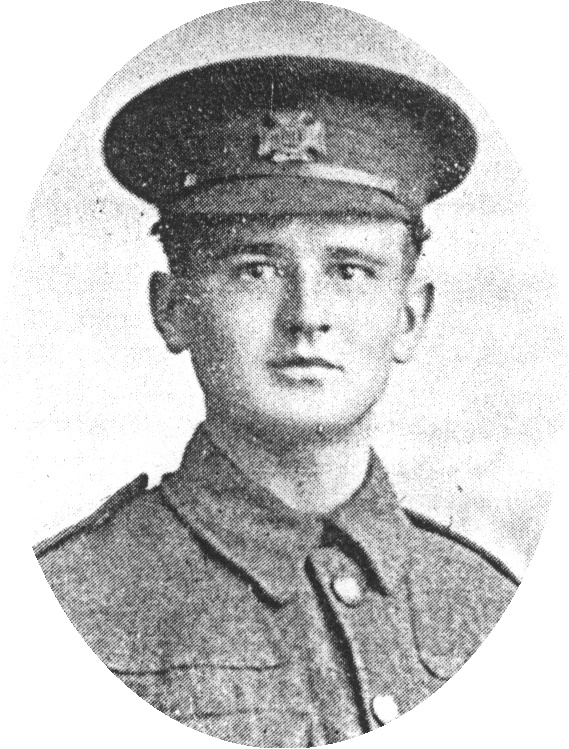
Thomson L photo Thomson L cem mem Thomson L grave

Leslie Thomson was the second son of Mr Walter and Mrs Thomson, hairdresser, of High Street, Reading and 18 Lorne St. Reading.  He was educated at Kendrick School and Christ’s Hospital (where he was in the Officers’ Training Corps), at the outbreak of the war he was employed in the Army and Navy stores.  He at once enlisted, and went with his battalion to Hemel Hemsted.  In November the battalion went to France, where they were involved in trench work.  On one occasion Leslie had a narrow escape when brining in a wounded comrade.

The Standard  Jan 16th 1915 published an extract of a letter from Walter to his father with the headline,

 “80 yards from the enemy”

Leslie Thomson was in the firing line with his regiment when they exchanged greetings with the enemy on Christmas day 1914.

“They were a rather weedy lot, although they included some fine American Germans.  Not a shot was fired all day.  In the morning we had a Communion Service under the most picturesque circumstances.

We have moved into new trenches now and are only about eighty yards from the enemy.  We are too near each other to be able to employ artillery, but of course we watch each other very closely”.

He was in action on the 18th March 1915 in the trenches near Houplines when a rifle grenade, fired by the Germans burst just behind him.  He died in hospital the following day from his wounds. He was 22 years old.

His mother also received the usual letter informing her of his death:-

Dear Madam,

I regret that it is my painful duty to have to inform you of your son’s death.  He died this morning of wounds received in action yesterday.  It is very sad, as he was such a nice boy, and well liked by all, and it is a great loss to his company, as he was so keen; also to the battalion.  It may be a little consolation to you to know where his body was placed at rest.  His funeral took place today.  The Commanding Officer and some of his comrades were present.  The Rev. H. M. Webb-Peplow performed the ceremony.  The effects found on his person will be forwarded as early as possible. 

Believe me to remain in you great loss,
Yours in deepest sympathy,
A. N. Davis, S.A.

Leslie Thomson is buried in Cite Bonjean Military Cemetery, Armentieres.  Grave location IX.C.17.  His funeral was described by Major Tyrwhitt in a letter to his parents.

“Your son was buried by the chaplain to the brigade in the hospital cemetery, and I was fortunate to be able to attended the service with a number of his comrades.  His grave will be marked by a simple wooden cross, bearing his name and that of his regiment, and a careful record of its position will be kept at our headquarters.  Your son was always a bright, and cheerful man, and such a good soldier that I shall personally much miss him, as will many of his comrades to whom he had endeared himself.”

Forty two of his comrades signed a letter to his mother, each expressing heartfelt sympathy with her in her loss, and stating:

”We shall miss him very much, as he was a good soldier, one who could be relied upon to do his duty in the face of any odds, and he was always very willing to do all he could for the comfort of his fellow men.”

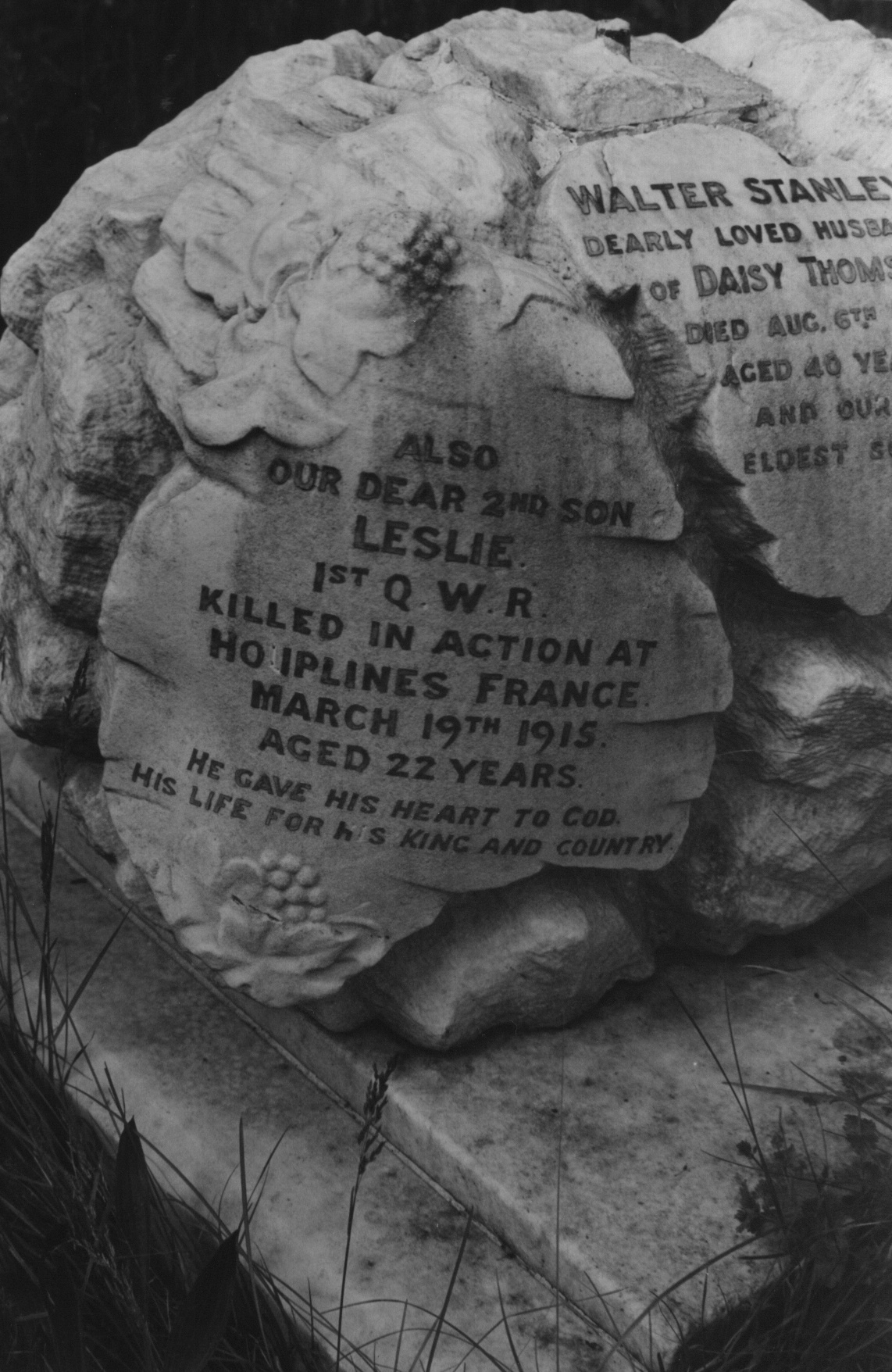
He is commemorated on the family grave with the words:

“He gave his heart to God, his life for his King and Country”.

Edward William Hunt & Sidney Richard Hunt

E.W.Hunt
Rifleman 2216
The Queen’s (Royal West Surrey Regt.) also Queen’s Westminster Rifles 

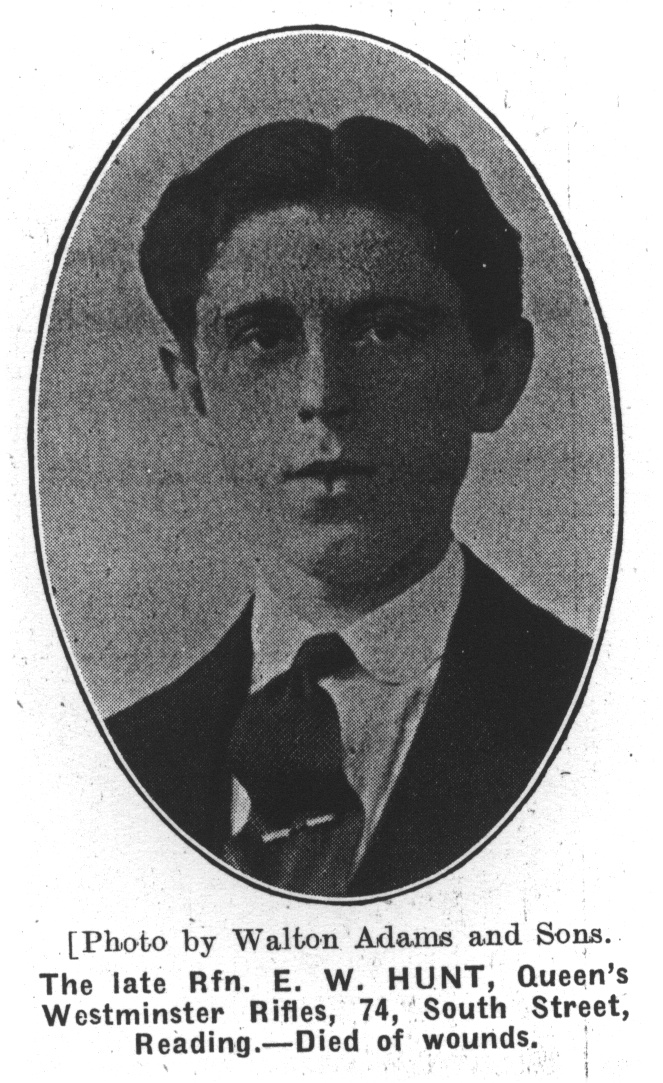
Hunt EW photo

Edward William Hunt lived at 74, South Street, Reading. His father was a grocer and he had an elder brother and three sisters. Edward died of wounds on 14th March 1915.  He is buried in Cite Bonjean Military Cemetery, Armentieres.  Location IX. C. 41.   His grave is just a few yards away from that of Leslie Thomson who is also commemorated in the Reading Cemetery.

Rifleman Hunt was an old boy of Reading Collegiate School.  He was employed at Liberty’s, London as an apprentice draper but joined up at the outbreak of war and was sent to the front in November 1914.  The Standard 23rd March 1915, printed a letter from a friend which explained how Edward Hunt met his death.  He was employed in sniping operations on the morning of his death.  He had three more rounds to fire when he was shot.  He was buried the following day.

Sidney  Richard Hunt
Private 227059
54th Battalion Canadian Infantry (Central Ontario Regt.)

 Sidney Richard Hunt was the elder brother of Edward William Hunt. The 1911 census indicates that he was seven years older than Edward.  Sidney was a grocers assistant, presumably in his fathers shop. It is not known when he went to Canada.

He died on 16th October 1918 and is buried in Sauchy-Cauchy Communal Cemetery Extension, Location B. I.  The village of Sauchy-Cauchy was captured by the 56th (London) Division on the 27th September 1918.  The Communal Cemetery Extension was made by the division in September and October, 1918.  After the Armistice graves were brought in from the German Extension and battle fields.  Exact details about the death of Sidney Richard Hunt are not known.

Note: The names of these two men were noted when the Berkshire Family History Society chronicled the monument inscriptions in the Reading Cemetery in the 1990’s.  When the author tried to find the names only the family headstone could be found.  The body of the grave has sunk and kerbs have been removed. The grave number is 12484; BFHS classification is 66A9