Category Archives: Regiments

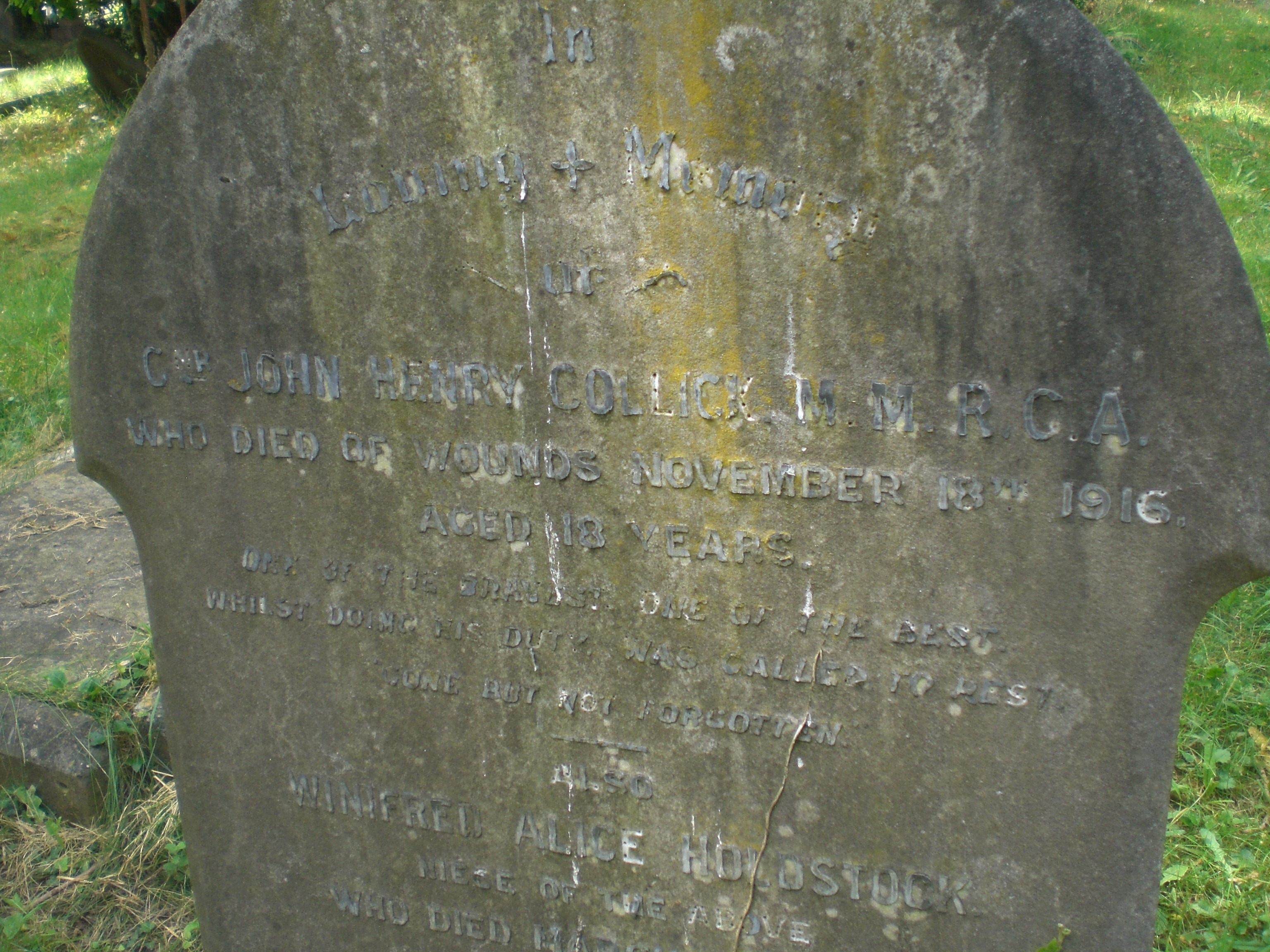
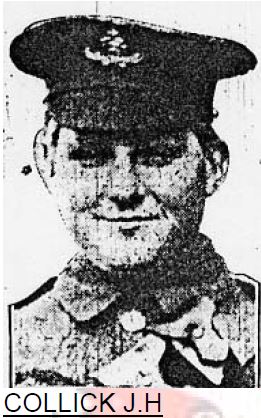
John Henry Collick

John Henry Collick M.M.
Gunner 64172 94th Siege Battery
Royal Garrison Artillery

 Division 38
 John Henry Collick  CIMG2217

John Henry Collick, was the son  of Thomas Edward and Charlotte Collick.  He was born at Lydd, Kent. He died of wounds, aged 18.  John Collick was officially too young to serve over seas.  His is a registered war grave with a private headstone, number 15189.  He shares his grave with his niece, uncle and aunt.  His name also appears on a special memorial in the War Plot, his grave having for sometime been lost.

John died of his wounds at the Frensham Military Hospital, Farnham and his body was interned in the Reading Cemetery. John was educated at the Reading School and at Lydd in Kent.

He was awarded the Military Medal (MM) for bravery in the field. This award was made when John was a Linesman in France. He went out under heavy shelling and machine gun fire and repaired field telephone lines.
Picture and information on Military Medal from www.kentfallen.com
E. Clifford

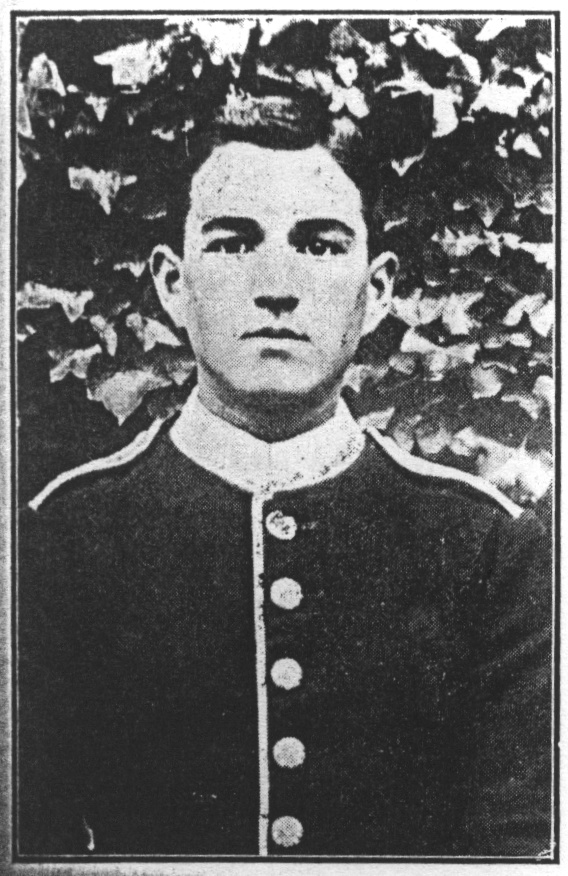
E. Clifford
Private
G/12795
10th Battalion The Buffs

Division 33

 E. Clifford  was the  husband of Emily Mary Waite (formerly Clifford), of Pitt House Cottages, Mapledurham, Oxfordshire. Private Clifford died on 24th November 1918. The  cause of death unknown.  He is buried in a registered war grave number 4930 and this is marked with a CWGC war pattern  headstone. 

Herbert George Clarke

Hebert George Clarke
Private 17289
2nd Battalion Hampshire Regiment.

Clark HG photo dbImage[1]

Herbert Clarke lived at 6 River Road Reading. He was  a member of the regular army as indicated by being a member of the 2nd Battalion of the Hampshire Regiment. As such he was part of the initial British Expeditionary Force(BEF).

The Standard December 12th 1914 reports that Herbert was injured at 1st Ypres when the fourth finger of his left hand was blown off.  It was recorded  that his hand was bandaged by chums and that he had to tramp ten miles before being surgically treated.

In the spring of 1915 he landed at ‘V’ beach on the Gallipoli peninsular. His battalion were on board an old collier the ‘River Clyde’ and the landing did not go according to plan . The whole campaign was destined to fail with great loss of life  the Turks always had the upper hand and the high ground. Herbert was one of the lucky ones, he survived the ordeal of the landing.  He spent  at least three more months on the peninsular, although nothing particular is known of his experience whilst there, although we can guess that it was neither a pleasant or easy.  The heat was intolerable, sanitation appalling, the dead largely remained unburied, flies were every where and dysentery was endemic because clean fresh water was difficult to get.

Herbert was still in the Dardanelles when preparations were being made for the next ‘push’ due to start on the 6th August 1915.  The attack was to follow the celebration of first anniversary of the war, if celebration can be said to be the correct term as by now Britain had lost 76,000 men killed, 252,000 wounded and 55,000 missing a total of 383,000 men.  

Herbert lost his life on the opening day of the battle. He had no know grave and was commemorated upon the Helles memorial. The CWGC record bears no family details and it has been impossible to find any personal details. He is commemorated upon the Alfred Sutton School War Memorial.