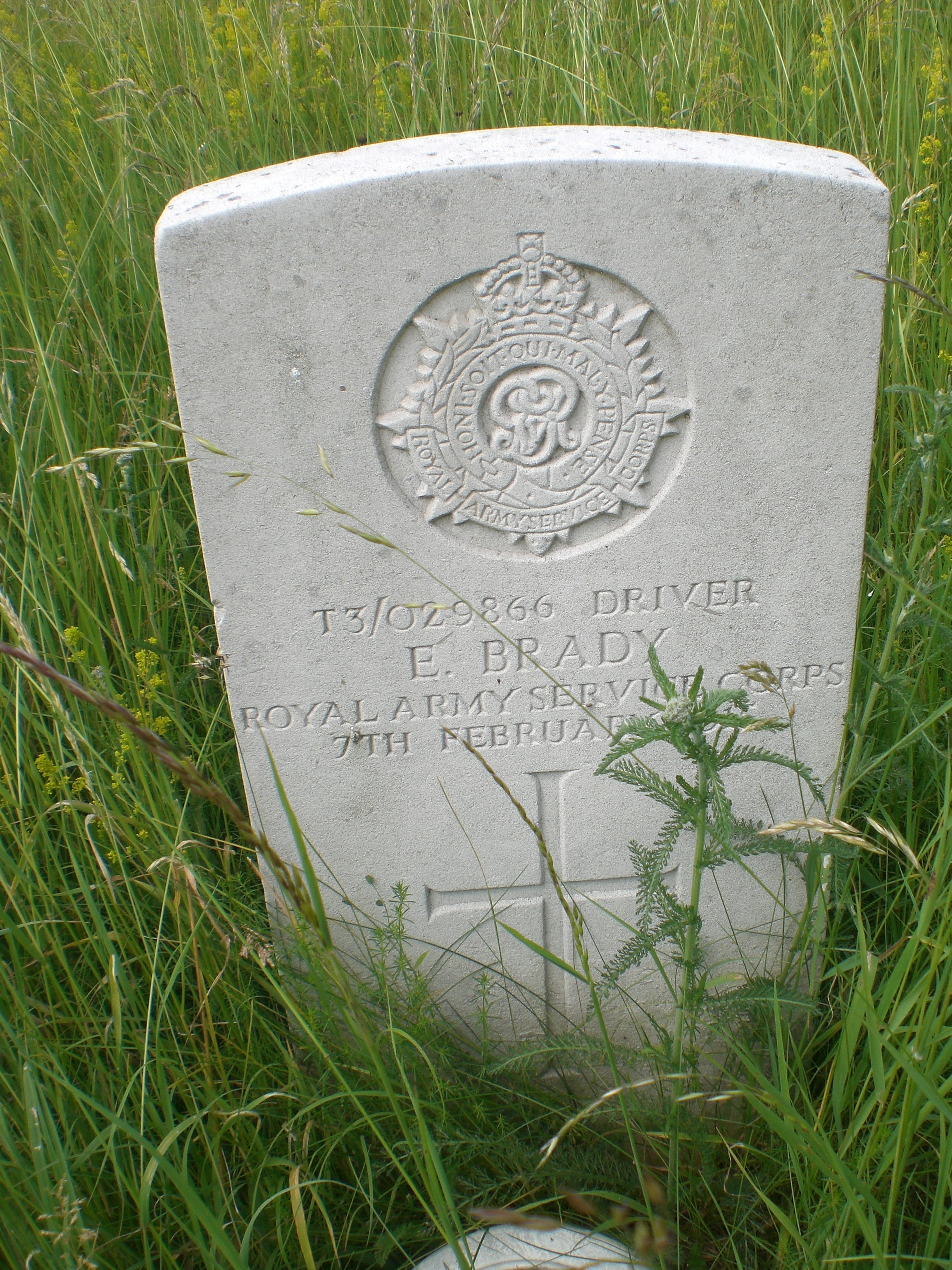
Edward Brady
Driver T3/029866 190th Company
Army Service Corps.
Division 15
Edward Brady was stationed at Pangbourne. He died on 7th February 1915. The local papers carried accounts of Edward Brady’s death. The Chronicle Feb. 12th 1915 titled their account
“Deserter’s dash for liberty”
Edward Brady 35 and was married to Ellen Brady and lived at 69, Cirencester Street, Harrow. Before the war he had been a coal porter, he enlisted on 23rd November 1914. His problems started at Christmas when he overstayed his leave. His wife said she had not received her separation allowance and her husband stayed to work in order to pay the rent. She had received her allowance a week before he went back. On the Friday evening he broke away from camp and was arrested the following morning in London. He was being brought back to Pangbourne on a 3 o’clock Paddington train, he asked to go to the lavatory and was out of site for a short while. During this time he jumped from the train which was stated to have been travelling at about 50 mph. His body was picked up near Ruscombe signal box. Brady was taken to the Royal Berkshire Hospital but died next morning of his injuries.
Brady was posted as a deserter after his extended leave but this was later altered to a complaint of extended leave. On his return he was put in cells for 7 days awaiting a court martial. At the end of that time he was let out and given to understand he would have his discharge. He absconded and when arrested was handcuffed but these were removed at the request of Mrs Brady and because it would be a disgrace to the regiment. At the Police station he was told that he was liable to be shot for being a deserter. Brady asked accompanying officer Sergeant. Alfred James Stableton if this was true the sergeant replied that such an extreme penalty would not be used in his case. On the train Brady was “very jovial and absolutely sober”. He died from shock following a fractured skull and arm and other injuries consistent with a fall from a train. The post-mortuum also showed old pleurisy and fatty degeneration of the heart and liver. In the course of summing up the Coroner said it was impossible to say whether the deceased left the train with the intent to take his own life or to escape. The jury returned a verdict of death whilst trying to escape and expressed sympathy for the widow.
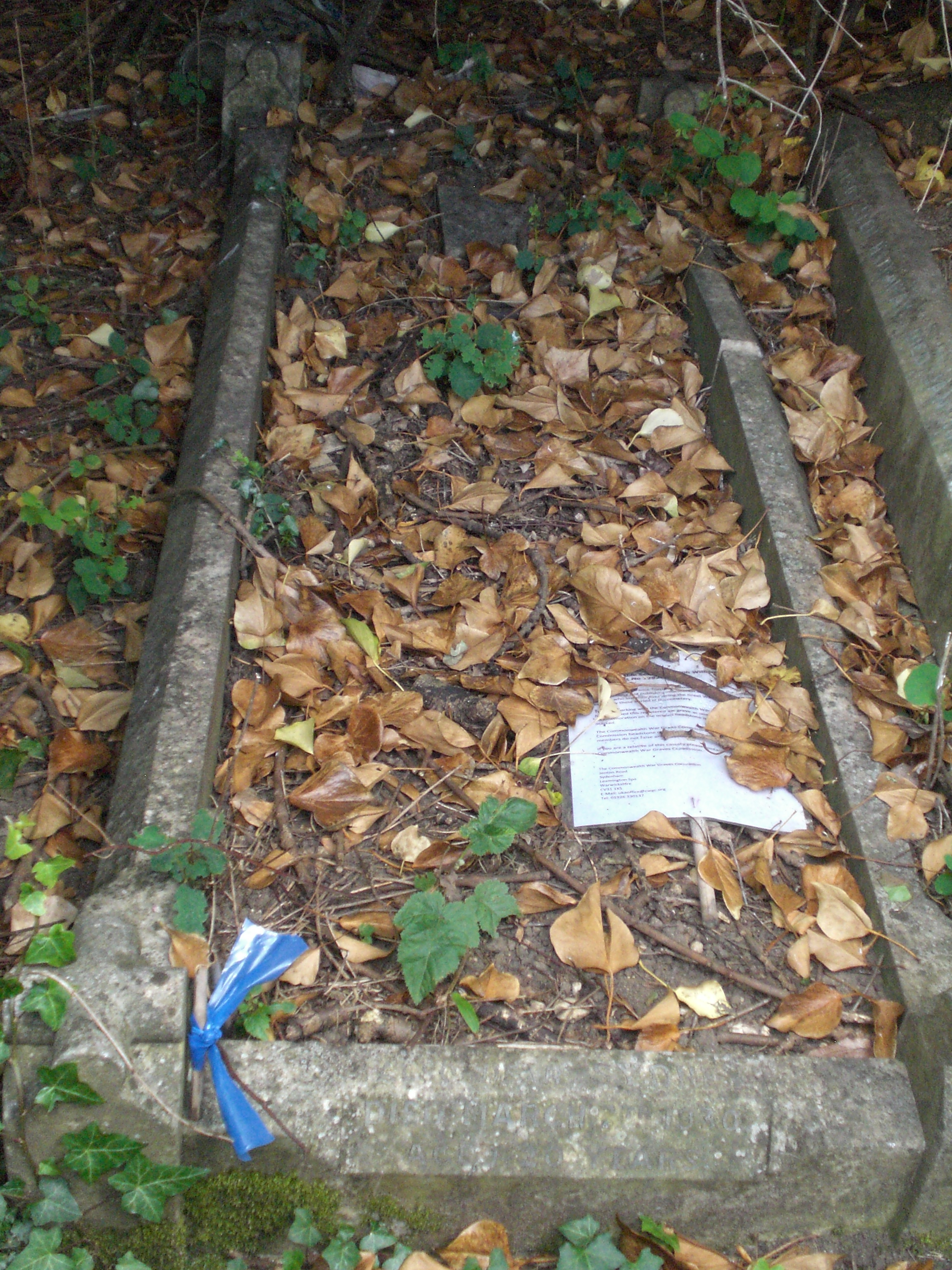
A CWGC headstone marks Grave 16050, a small memorial from his wife is also on the grave.