Category Archives: Registered War Grave

William Davis and George William Davis

William Davis
Sapper 167656
No.2 Tunnelling Depot. Royal Engineers

 Division 78
Extension
Davis bros cem

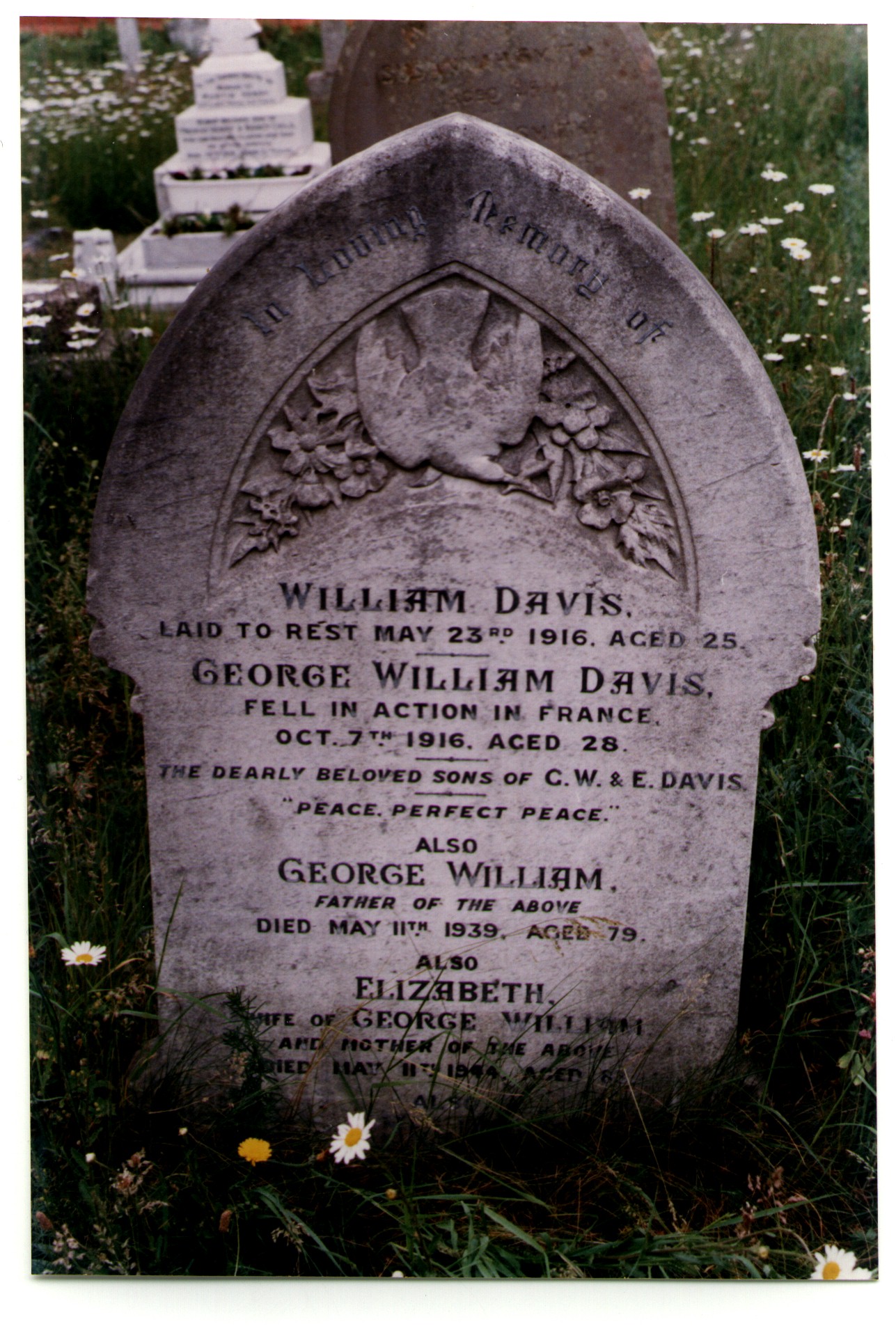
William Davis was the son of George William and Elizabeth Davis, of 33 Albany Road, Reading.  His grave is a registered war grave with a private memorial, his parents are buried with him.  Grave number 16223.  The story of William Davis is tragic and mysterious.  The details of the inquest were published in the Chronicle 26th May 1916.

  “After one day a Clipstone Camp Nottinghamshire  William Davis, aged 25, disappeared and his body was found in the River Mann – a shallow stream near Mansfield.  He had reported to camp on Saturday May 6th and was not seen after dinner on Sunday.

Giving evidence, James Davis* his brother said deceased had orders to report May 7th and was put in the Royal Engineers.  This was against his wish, he wanted the Royal Flying corps.  He had no liking for the Army and had appealed twice on business grounds but was refused.  When the appeal was refused he seemed to settle down and accept the position.

William Davis made the acquaintance of Benjamin Charles Everest, Royal Engineers, at Clipstone camp but did not appear very cheerful, he was quiet and reserved. 

James Davis said he felt that his brother would not take his own life, would in fact be the last man to do so. 

The body was found embedded in mud – verdict “Found drowned.” 

It is not clear exactly when William Davis died, the inscription on the grave states:
Laid to Rest May 23rd 1916”


George William Davis
Corporal 137811
237th Field Company
Royal Engineers


 George William Davis was the brother of William Davis.  He is commemorated on the headstone of his brothers grave.   George Davis was the husband of D.L. Mealings (formerly Davis), of Station House, Burghdere.   He was killed in action 7th October 1916 and is buried in the A.I.F. Burial Ground, near Flers, the Somme.  Location IV.A.25.

The “In Memoriam“ entry in the Standard 21st October 1916, is from his wife and gives some details of the action he was in at the time he was killed:

“Davis- G.W. – In loving memory of my dear husband, Corporal. G. W. Davis, who fell in action October 7th 1916, helping to lead a party of men to No Mans Land for defence work north of Gueudecourt”.

It was over the battle field in this area that the first tank battle had taken place on the 15th September 1916.  The bitter fighting of the last phase of the Somme battle lasted until November 1916.

For William and Elizabeth Davis, as for many parents, 1916 was a year of tragedy.  In their “In Memoriam” is a poem about their eldest son. 

He is gone, our dearly loved youth,
The heart of honour, the tongue of truth;
He, the life and light of us all,
Whose voice was blithe as a bugle call;
Whom all eyes followed with one consent,
The cheer of whose laugh, and whose pleasant word
Hushed all murmurs of discontent.


I has not been possible to find any information about James Davis
 

Evan Lloyd Davies

Evan Lloyd Davies MM
Corporal 200422 

1st/4th Royal Berkshire Regiment

 Division 32  Grave number 8995

 EL Davies oval2 ELDavies plaque

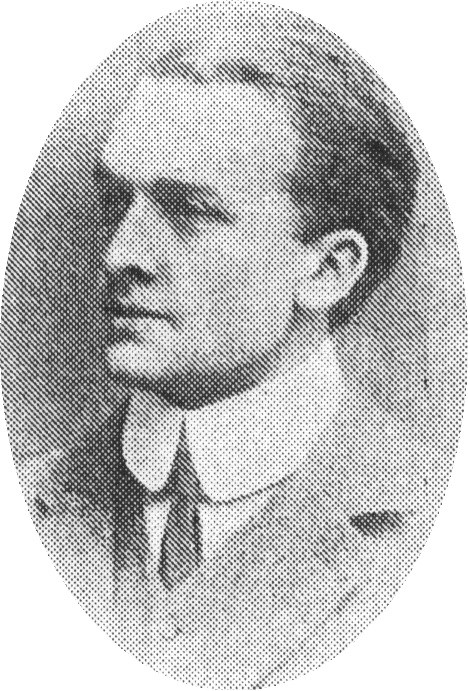
Evan Lloyd Davies was the son of William and Rhoda Davies and husband of Grace Ethel Davies.  He died on the 5th November 1918 of wounds received on 27th August 1916 as the 48th Division tried to take the Thiepval ridge.   During the battle he received the head wound which ended his war and ultimately his life.  Evan Lloyd Davies had acquitted himself well during the battle and was commended for the Military Medal for ‘distinguished bravery in the field’. He was buried in Reading Cemetery on the morning of the Armistice,  11th November 1918 aged 35.  He left his wife and two children.

Evan Lloyd Davies was a teacher at the Wokingham Road Senior School, now Alfred Sutton Primary School. The plaque above commemorates his name and is in the junior hall of the school.

 He had served overseas with his Territorial unit from the beginning of the war.  His full story is told in  ‘The School, the Master, the Boys and the V.C.’ which is the story behind  the Alfred Sutton School Memorial.

Children Remember ELDavies
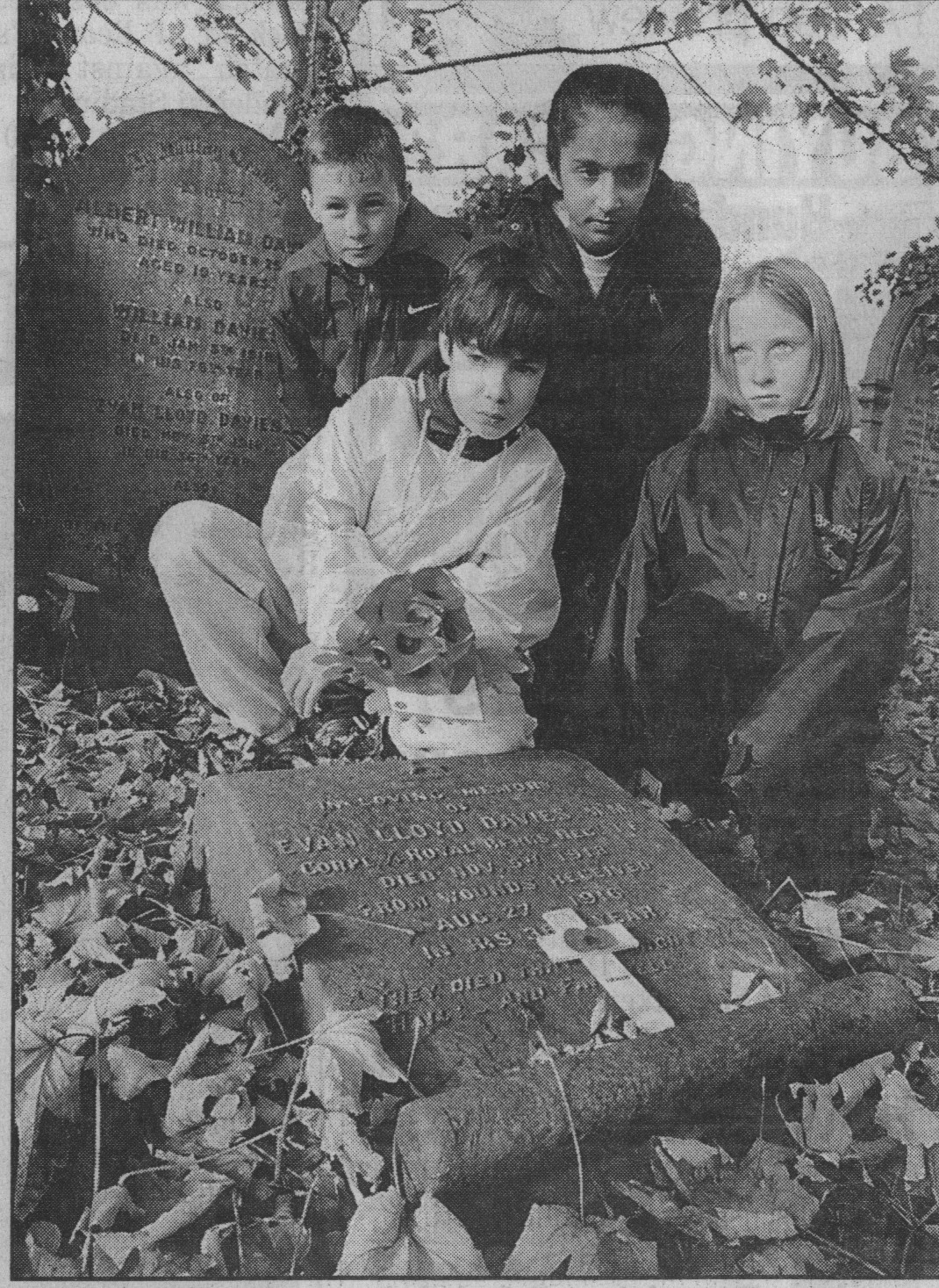
In 1998 children from the school laid a poppy wreath on the grave of Evan Lloyd Davies in remembrance of his service to the school and his role in the Great War.

Evan Lloyd Davies was one of six Reading teachers to lose their lives in the war.

Charles Frederick Denman Cook

Charles Frederick Denman Cook D.S.O.
Lieutenant Colonel 1st Battalion Wellington Regiment.
New Zealand Expeditionary Force

 Division 67
Extension

CFD Cook DSO CFDCook grave

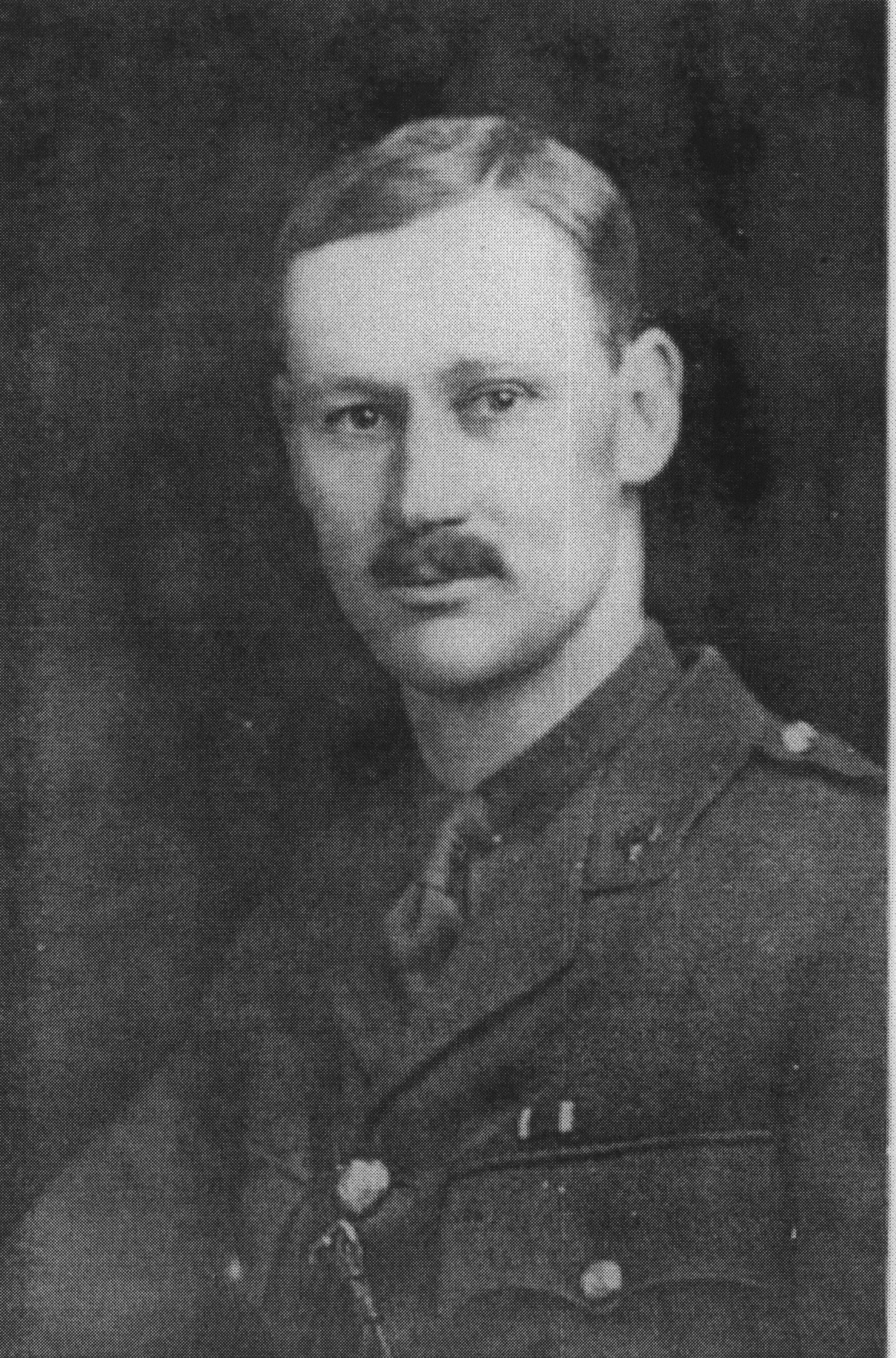
Charles Frederick Denman Cook was the son of  Professor C.H.H. Cook MA of Christchurch New Zealand (one time Fellow of St. Johns College Cambridge) and nephew of T.J. Peacock, “Calderwood”, Caversham.  Born in 1883, Charles  was an Master of Art with First Class in Classics with Honours, and LL.B.   His mother was Mrs E.D. Cook of Marton, Marton was Charles last address. 

Initially a member of the New Zealand Territorial force he joined the New Zealand Expeditionary Force in August 1914 with the rank of Captain. As part of the ‘Main Body’, that is the first contingent of men who were to serve with the New Zealand Expeditionary Force, he reached Egypt on 3rd December 1914.   He saw active service in Egypt, Gallipoli and France. 

 Whilst still a Major, Charles Cook  was mentioned in dispatches in February 1916 (research from Phil Lascelles states London Gazette 28th January page1207) the citation states ‘in connection with operations described in General L. Hamiltion’s despatch dated 11th December 1915’; and again in March 1917 London Gazette 1st June 1917 p5429, Record 683 ‘For continuous devotion to duty and gallantry in the Field.  He has been on active service since the outbreak of war, filling many positions of importance including temporary Command of a Battalion,  he has constantly discharged his duties in a most conscientious and efficient manner.  He has taken part in practically all the operations in which the Division has been engaged, in Gallipoli and in France, and in action has always displayed keen judgement and the utmost coolness and bravery, especially during the period 21st September  1916 to 26th February 1917.’   Subsequently he was invested by the King with the DSO – Distinguished Service Order.  The citation was for ‘distinguished service in the field’. London Gazette 4th June 1917.  Cook became a Lieutenant Colonel  on 15th March 1915

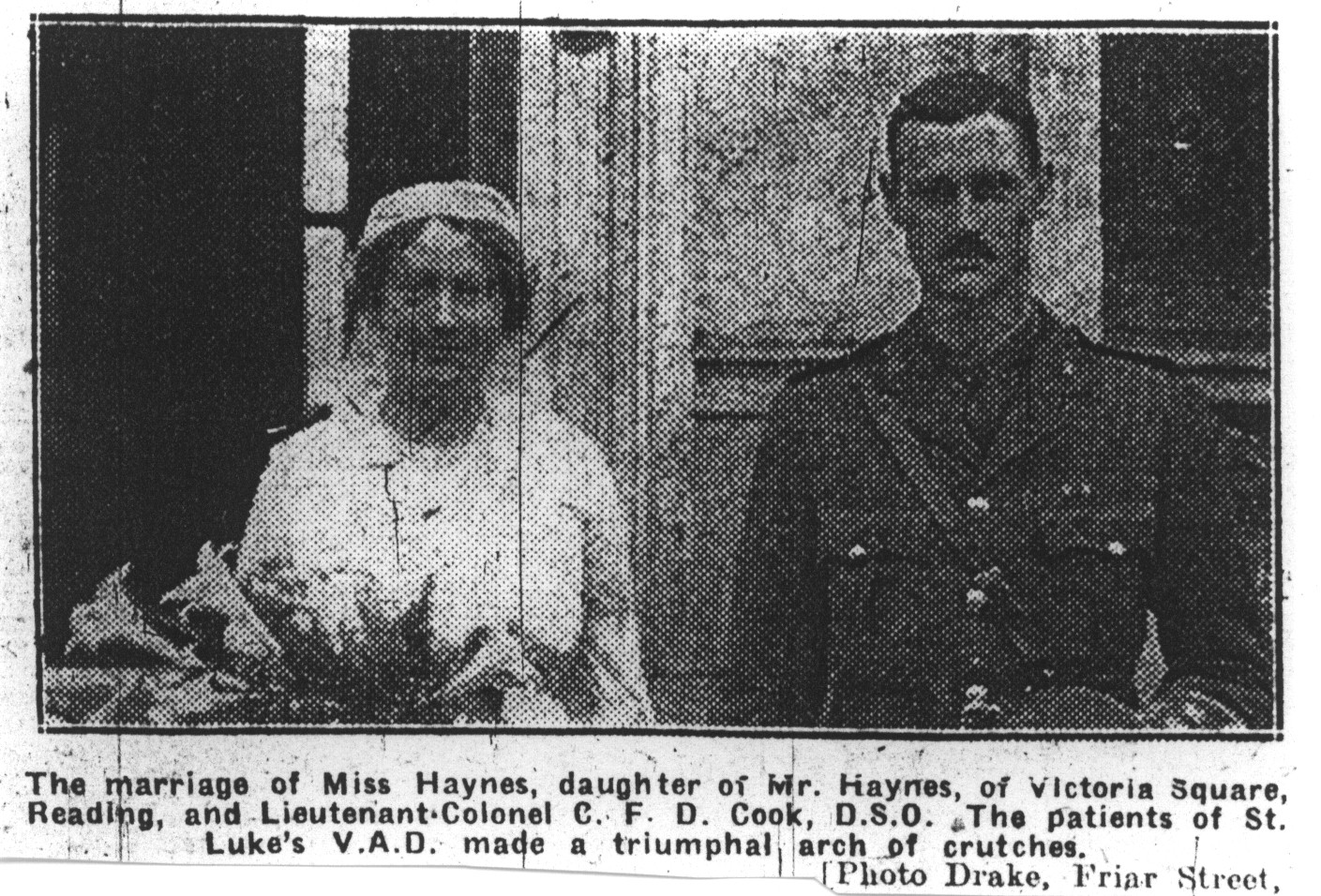
 On 21st November 1917 Charles F. D. Cook married Miss Agneta Mary Haynes of 11. Victoria Square, Reading.  

CFDCook marriage

Miss Haynes had been on the staff of St. Luke’s V.A.D. hospital for some time, and “ the liveliest interest was aroused in the wedding by the staff and patients, the latter forming a guard of honour at the church, whilst members of staff were presented at the ceremony.  Wounded Soldiers formed an arch of crutches at a wedding.  There was a very large number of the general public, and the approaches to the church were thronged…….The patients at St Luke’s Hospital presented Miss Haynes with a New Zealand badge made into a sofa cushion cover, and the staff’s gift consisted of silver tea knives.  In the evening the patients had a whist drive with refreshments and wedding cake in honour of the event”. (Reading Standard 24th November 1917)

CFDCook funeral

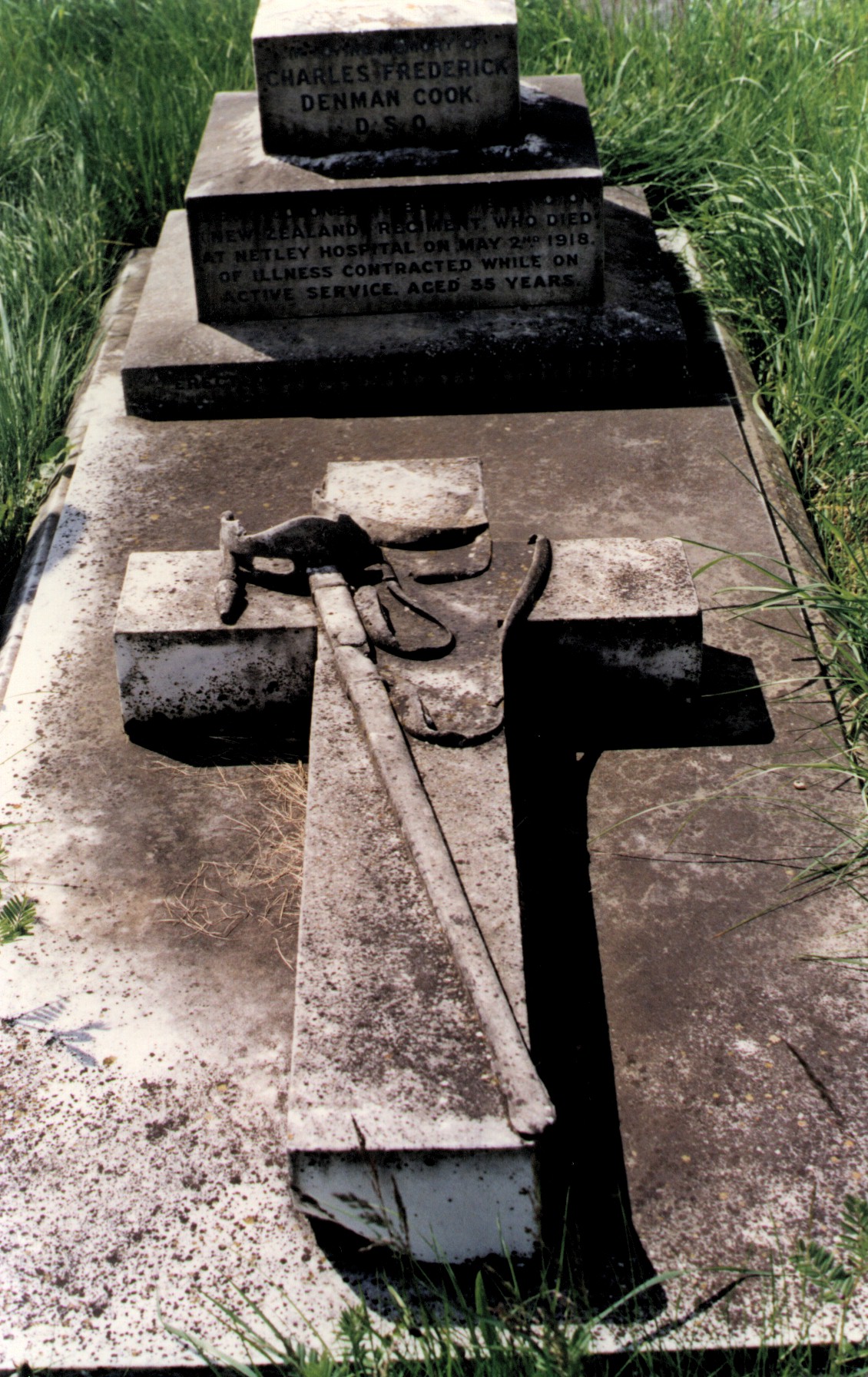
 Lieut.-Col C.F.D. Cook died on May 2nd 1918 of cerebro-spinal meningitis, contracted on active service, at Neatley Hospital, Portsmouth.  He was buried on May 4th and was given  an impressive military  funeral.  His is a registered war grave, number16436.  The Memorial was erected by men of his unit.  His wife Agneta is buried with him as is his brother whom Agneta later married.


The grave also states “ IN LOVING MEMORY OF MY DEAR BROTHER LIEUTENANT IN THE 8TH BATTALION ROYAL BERKSHIRE REGIMENT”. This refers to the brother of Agneta, WILLIAM GRAY HAYNES who died on Saturday, 25th September 1915. Age 24.  He is buried at
BOIS-CARRE MILITARY CEMETERY, HAISNES, Pas de Calais, France.  Location A. 19.